Best Trading Platform India: 7 Brokerages Compared
Compare the best trading platform India options for NSE and BSE traders by fees, order types, mobile performance, APIs and regulatory checks.

What should you check before choosing a trading platform? The answer isn't only the lowest brokerage. The suitable platform depends on how often you trade, whether you need advanced order types, how complex your options workflow is, whether you use APIs, how reliable your mobile connection is, and which plan-specific charges apply.
The NSE, or National Stock Exchange, and the BSE, or Bombay Stock Exchange, are India's principal stock exchanges. Brokerage is the fee a broker charges for executing a trade. Statutory charges are levies such as exchange, regulatory, transaction and tax-related charges. A GTT order, meaning Good-Till-Triggered, remains active until its defined trigger condition is reached or the order expires under the broker's rules.
This comparison treats platform selection as an operational question. It examines reported features, brokerage transparency, order functionality, low-bandwidth usability, API access, options tools, and regulatory disclosures. It is educational journalism, not a personalised recommendation or investment advice.
Key takeaways: Compare the complete cost structure, not just the headline brokerage. Test order flows and app stability before relying on a platform. For research or analyst calls, verify SEBI registration and attribution.
Table of Contents
- 1. Zerodha Kite web and app
- 2. Upstox Pro web and mobile with Developer API
- 3. Angel One app and web with SmartAPI
- 4. Dhan Web and App with Options Trader and TradingView
- 5. FYERS Web and Mobile with FYERS Trader and API
- 6. ICICI Direct App and Web with 3-in-1 banking
- 7. 5paisa App and Web with Xstream API
- Top 7 Indian Trading Platforms, Feature Comparison
- How to Shortlist a Platform Without Relying on Hype
1. Zerodha Kite web and app
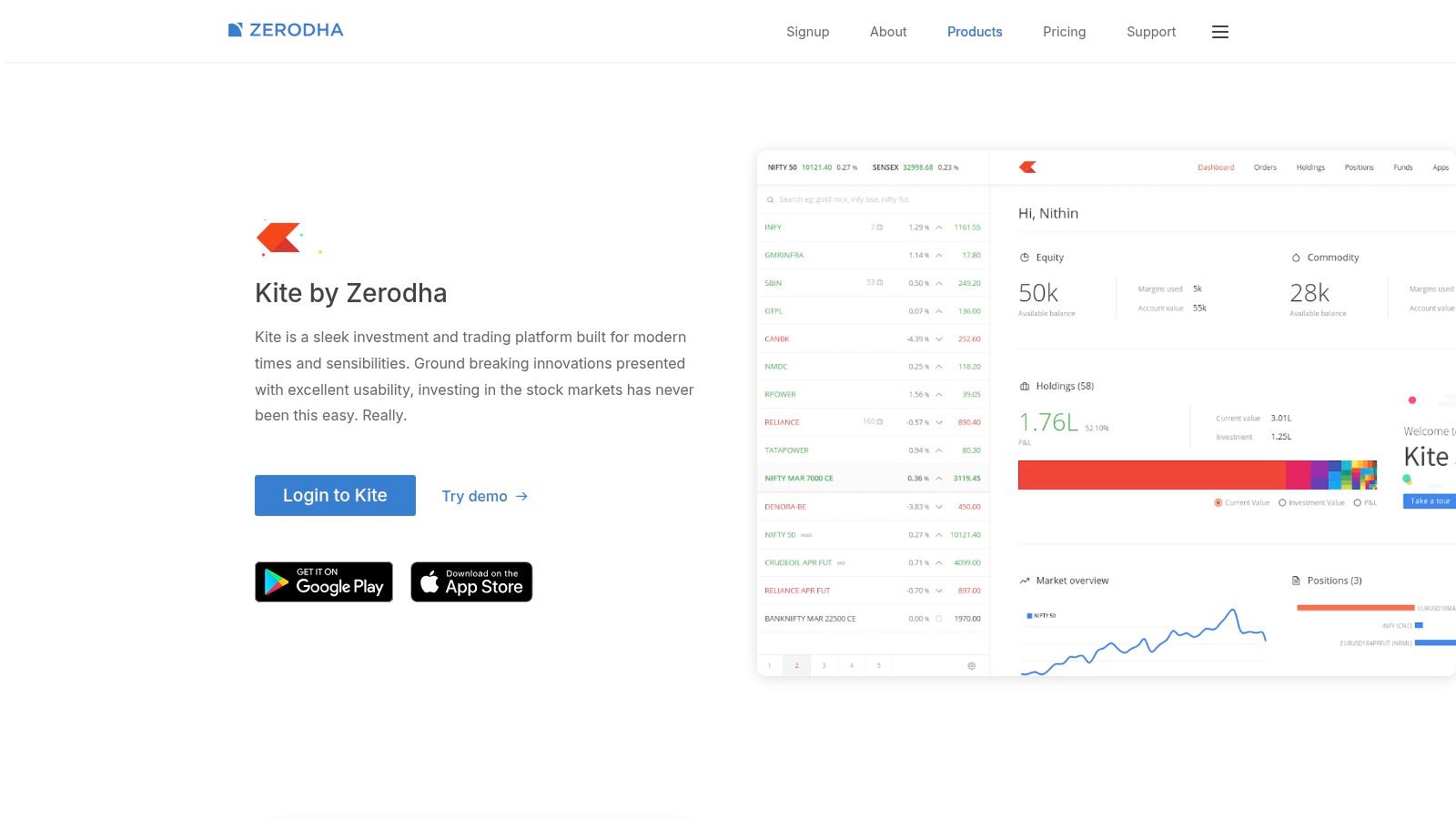
Zerodha Kite is built around a relatively uncluttered trading experience across web and mobile. Its practical strength is the balance between a lightweight interface and tools that active users can add as their needs develop. The platform supports NSE and BSE trading, charting, baskets and GTT orders, while the Kite product page provides the broker's current product context.
Kite's GTT, or Good-Till-Triggered, orders are useful for users who want a trigger-based workflow for longer-term targets or protective conditions, subject to the broker's order rules. Its charting setup includes more than 100 indicators, a quantitative feature that should be checked against the current product interface before use. Baskets allow multiple orders to be prepared together, which can reduce repetitive order-entry work, though each order still carries its own execution and cost considerations.
Where Kite fits best
The platform's API layer is important for users who want to connect portfolios, analytics or custom applications. Kite Connect APIs are designed for developer-facing trading and portfolio integrations, so the relevant question isn't whether you need an API in theory. It's whether you have a specific workflow, such as importing positions into a private dashboard or sending structured orders through your own software.
- Cost review: Zerodha publishes a transparent charges page, but brokerage should still be read alongside statutory and account-related fees.
- Execution workflow: Fast order placement and baskets suit users who value fewer steps.
- Options limitation: Users building complex multi-leg options strategies may miss a dedicated built-in options builder.
Kite is a sensible platform to examine if you want a widely established ecosystem spanning web, app, APIs, education and support. It may require more external planning for advanced options construction. Readers comparing the wider ecosystem can also review this guide to the best stock market website in India.
2. Upstox Pro web and mobile with Developer API
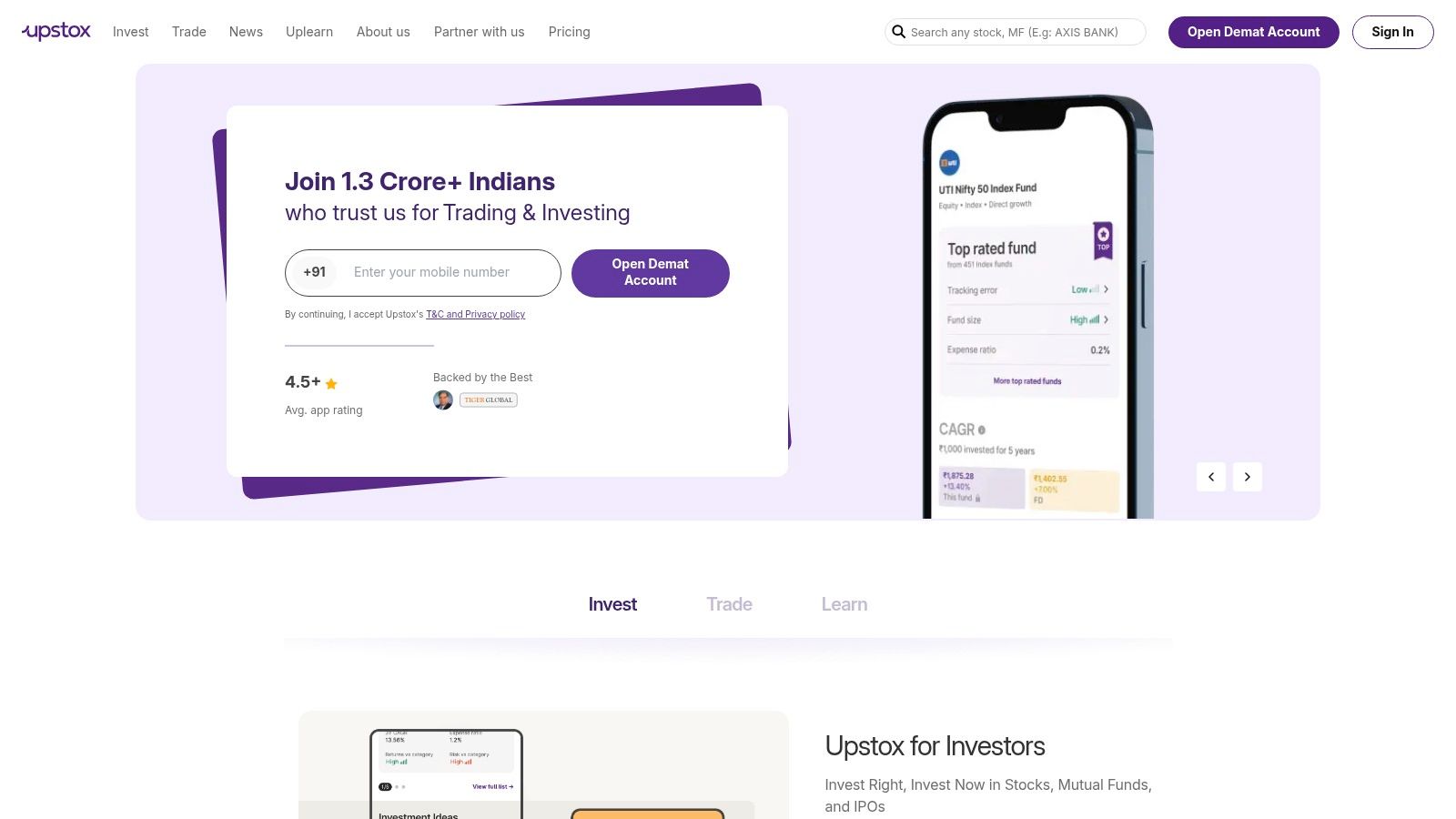
Upstox Pro places multi-order workflows, GTT functionality and options tools inside a web and mobile trading environment. That combination makes it more relevant to users who move between ordinary equity orders and derivatives analysis rather than treating the app as a simple holdings screen.
The platform's options chain tools can help users inspect available contracts and organise related orders. Basket orders group multiple trades for preparation and execution, but traders should understand whether the orders are placed together or merely staged for manual confirmation. GTT also requires careful reading of the broker's conditions, including validity and trigger behaviour.
Upstox's developer offering is one of its clearest differentiators. It provides REST and WebSocket APIs, along with official SDKs for Java, Node and Python, giving developers routes for both ordinary requests and live data or event-driven integrations. That matters for algo developers, but API access isn't the same as a ready-made automated strategy. Users remain responsible for authentication, error handling, order reconciliation and compliance with applicable broker and exchange requirements.
Practical rule: Treat the charges page and the API documentation as operating documents, not marketing extras. A low headline fee doesn't answer what your particular segment and plan will cost.
The broker's published notes indicate that brokerage caps can vary by segment and plan, with the site referring to amounts up to ₹30 per order. That figure must be verified against the applicable plan before trading. Heavy F&O users should also check whether the cap, order limits and data access match their expected workflow. Upstox's official website is the appropriate place to confirm current terms, while readers interested in understanding call-based market content can consult Bharatstox's intraday trading calls explainer.
3. Angel One app and web with SmartAPI
Angel One takes an app-first approach, combining trading functions with screeners, alerts and research-oriented discovery tools. That structure can help beginners and semi-active traders who want market information near the order screen, although research visibility shouldn't be confused with suitability for a particular trade.
The platform supports options trading and publishes plan and pricing information. Its SmartAPI provides REST documentation for order placement and market-data access, while brokerage-estimation documentation can help developers calculate expected charges before connecting a custom workflow. This is useful when an API integration needs a cost model rather than a simple order button.
Read the tariff by segment
Angel One's pricing needs closer inspection than a single “discount broker” label suggests. The card rate for relevant segments can show the lower of ₹20 per order or a percentage, depending on the segment and applicable plan. Equity delivery isn't necessarily zero-brokerage in every situation, so users should verify the exact slab rather than assume that one segment's pricing applies across the account.
- Research workflow: Screeners and alerts support market monitoring, but they don't replace independent analysis.
- Automation workflow: SmartAPI documentation is relevant to users building integrations, not only to full-time algo developers.
- Cost workflow: Compare brokerage, statutory charges, account fees and any plan conditions together.
The distinction between reported product features and editorial advice matters here. Angel One's official platform information can establish what the broker offers, but it cannot determine whether the service fits an individual's risk tolerance or trading pattern. For a broader discussion of research tools, see Bharatstox's equity research platform guide.
4. Dhan Web and App with Options Trader and TradingView
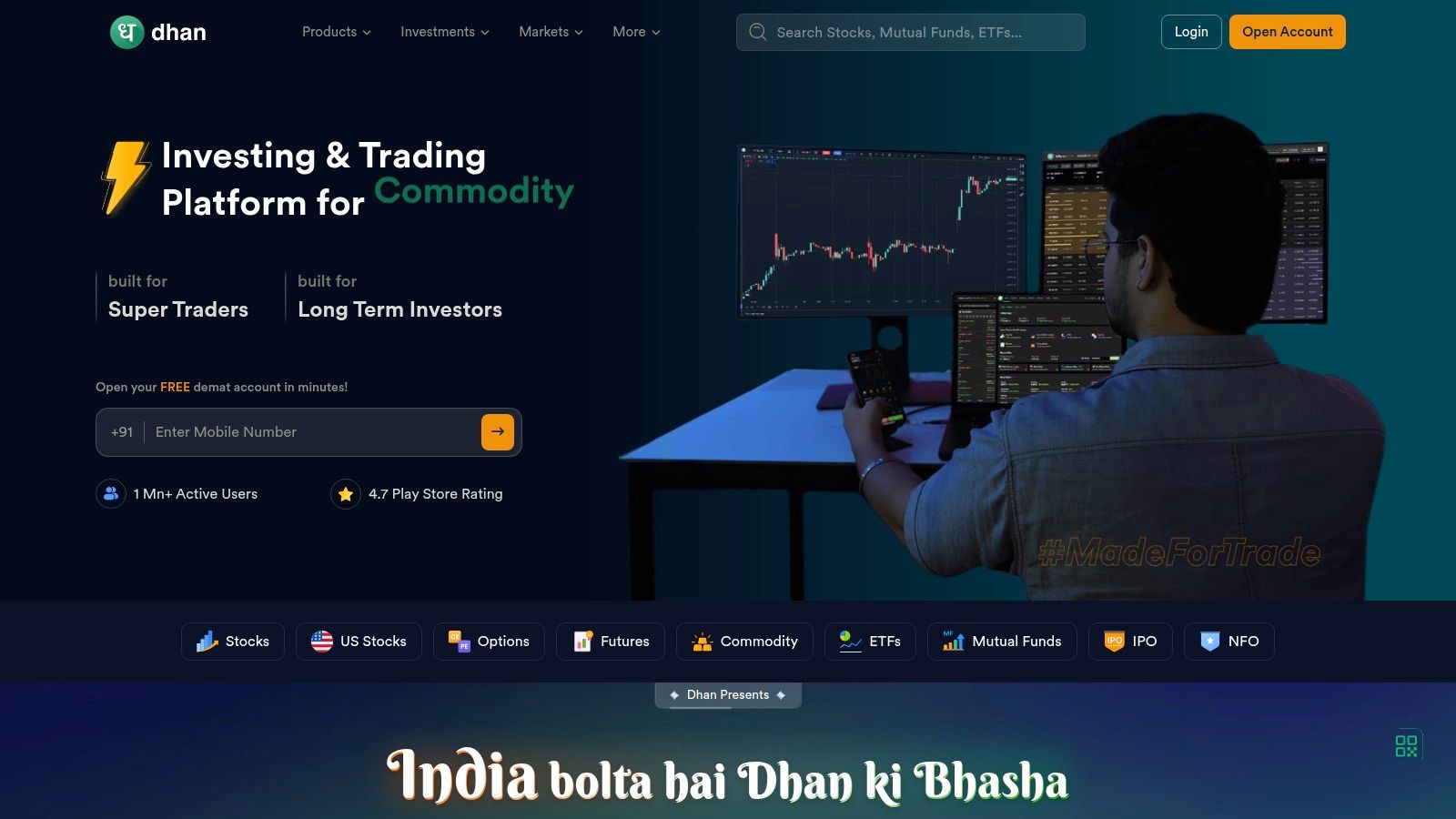
Dhan is designed more explicitly around active trading workflows. It offers web and mobile terminals, the DEXT T3 desktop product, a dedicated Options Trader interface and native TradingView integration. Users can trade from TradingView charts, which reduces the movement between chart analysis and the order ticket, though every chart-led order still needs deliberate review before submission.
The dedicated options environment is the central distinction. Options Trader supports strategy building and execution, making it more suitable for users who work with multi-leg structures than a basic buy-or-sell options screen. The benefit is workflow clarity. The risk is workflow complexity, because more tools can make it easier to create an order structure that the user hasn't fully checked.
Charting and data costs are separate questions
DhanHQ trading APIs are available for programmatic access, while the broker also offers a paid Data API. This separation matters. A user may need trading connectivity without requiring a recurring live or historical data subscription, whereas a developer building research, testing or monitoring tools may need the paid data layer.
- Execution interface: TradingView integration connects chart analysis with order placement.
- Options interface: The dedicated Options Trader product supports strategy-oriented workflows.
- API economics: Trading APIs and data APIs should be evaluated separately.
- Data verification: Confirm whether the required live and historical feeds are included in the chosen tier.
Dhan's official website provides the current product and pricing context. Its feature set is particularly relevant to readers exploring how chart-led strategies differ from simpler investing workflows, while Bharatstox's swing trading explainer covers the educational distinction without turning it into a security recommendation.
5. FYERS Web and Mobile with FYERS Trader and API
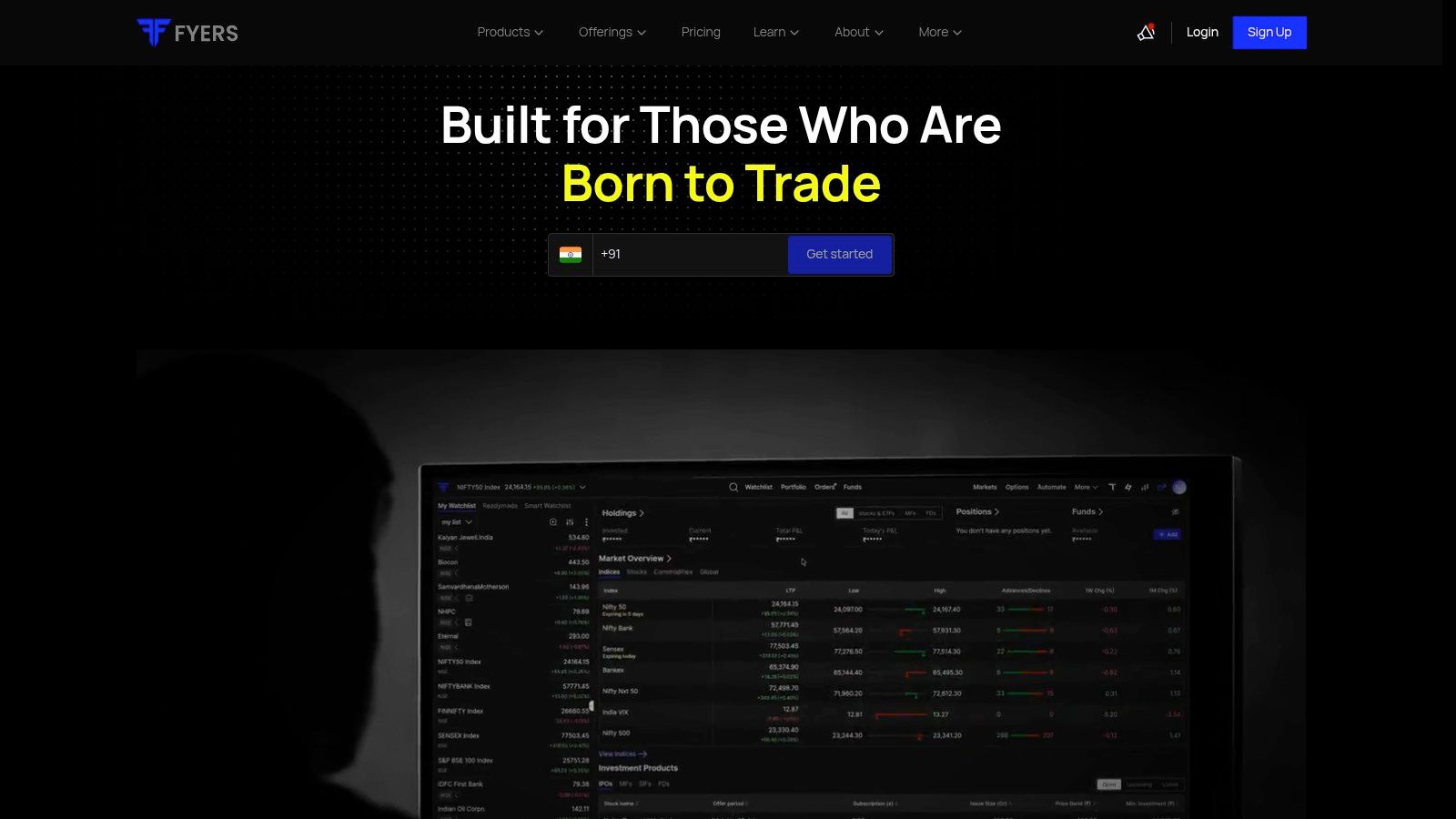
FYERS offers a connected stack across web, mobile and the desktop FYERS Trader platform. Its positioning focuses on transparent, capped brokerage, explicit statutory-charge disclosures and calculators that help users estimate the total cost of a trade rather than stopping at the broker's fee.
That distinction is important because brokerage is only one component of the ledger. A platform can look inexpensive at the headline level while statutory and account-related charges alter the final amount. FYERS' calculators and pricing disclosures give users a way to model the complete transaction, provided they enter the correct segment and plan details.
The broker also offers trading APIs without a subscription fee and supports SDK-based custom setups. This makes FYERS relevant to developers who want algorithmic or portfolio integrations without adding a separate platform-access charge. Free API access doesn't remove the need to manage authentication, exchange rules, order failures, data requirements and software maintenance.
The data caveat
Users who need extensive historical or derivatives datasets should verify the scope before committing to a research or testing workflow. Advanced datasets may require add-ons or third-party tools, so “API available” should not be read as “every data feed is included”.
- Platform access: Web, mobile and FYERS Trader are available without platform access fees under the stated product positioning.
- Pricing review: Use the brokerage and statutory-charge calculators together.
- Automation review: Confirm SDK support, data scope and operational limits.
- Power-user review: Check whether historical and derivatives data meet the intended use.
The FYERS website should be used to confirm current tariffs, calculators and API terms. Its strongest analytical angle isn't just low cost. It's the attempt to make the relationship between brokerage, statutory charges and platform access easier to inspect before an order is placed.
6. ICICI Direct App and Web with 3-in-1 banking
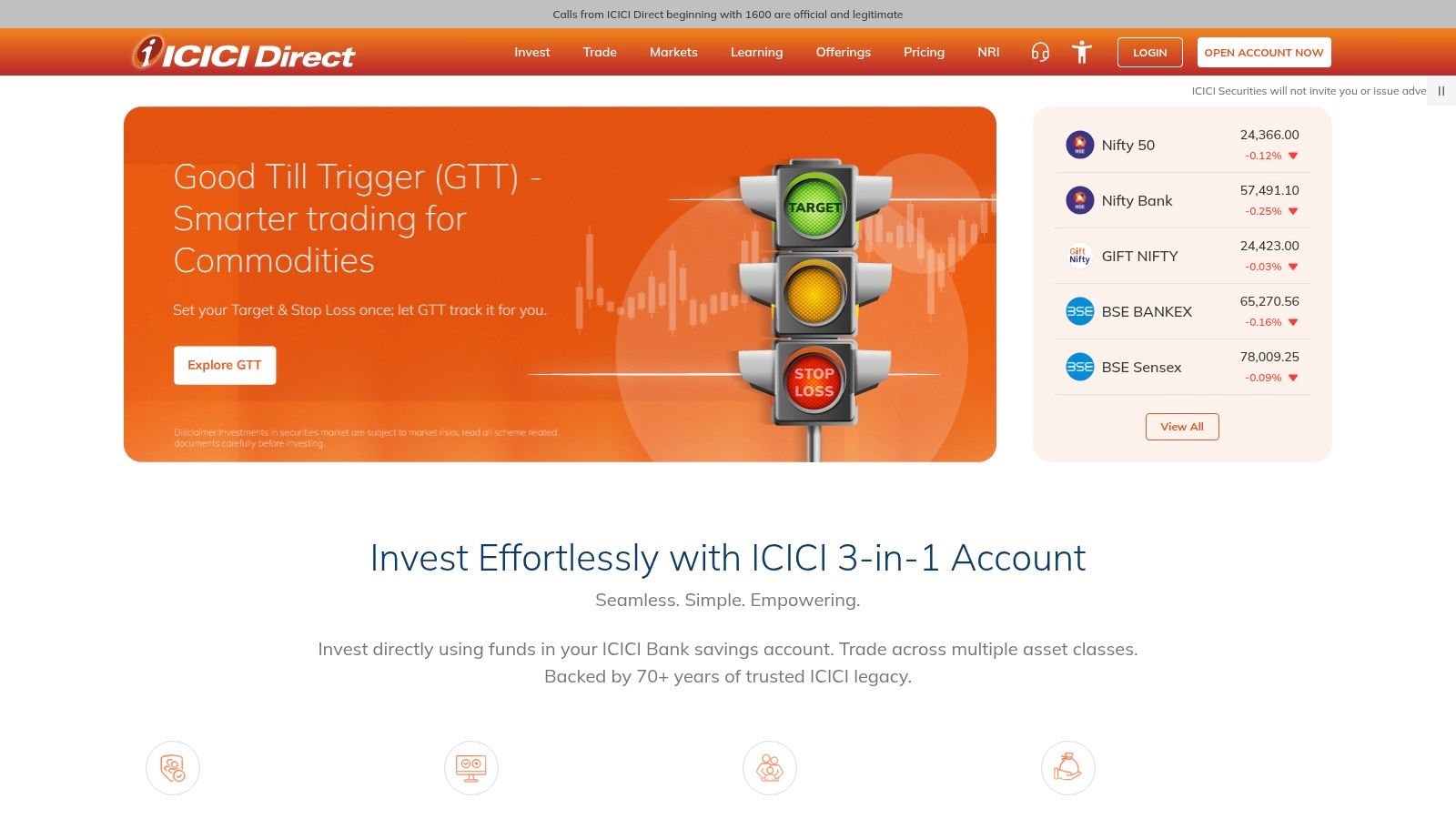
ICICI Direct's defining feature is the bank-linked 3-in-1 account, combining an ICICI Bank savings account, demat account and trading account. For users who prefer integrated fund movement and settlement processes, this can reduce the number of separate financial interfaces they need to manage.
The platform also offers a substantial options toolkit. Option Express, Strategy Builder and Payoff Analyzer support the process of examining possible strategy structures and their potential outcomes. Baskets and cloud orders add organisation to repeated or planned order workflows, while in-house research sits within the wider platform.
Convenience has a price question
Bank integration can be operationally convenient, but it doesn't automatically make a platform the least expensive choice for active derivatives users. ICICI Direct pricing varies by plan, and users trading frequently should compare the relevant brokerage with statutory and account charges rather than assuming that the convenience premium is immaterial.
This platform therefore suits a different evaluation logic from a pure discount brokerage. The question is whether integrated banking, research and options planning justify the applicable plan costs for the user's actual activity. That isn't a recommendation. It's a reminder that the cheapest headline brokerage and the lowest total friction aren't always the same thing.
- Banking flow: Examine how funds and settlements move through the linked account.
- Options planning: Test whether the strategy tools explain payoffs clearly enough for your workflow.
- Pricing: Compare plans before opening or actively using the account.
- Order planning: Check baskets and cloud-order rules, including validity and execution conditions.
Use the ICICI Direct website for current plan details and product disclosures. A bank-backed structure may appeal to users who value consolidation, while active F&O traders should pay particular attention to the plan-specific cost model.
7. 5paisa App and Web with Xstream API
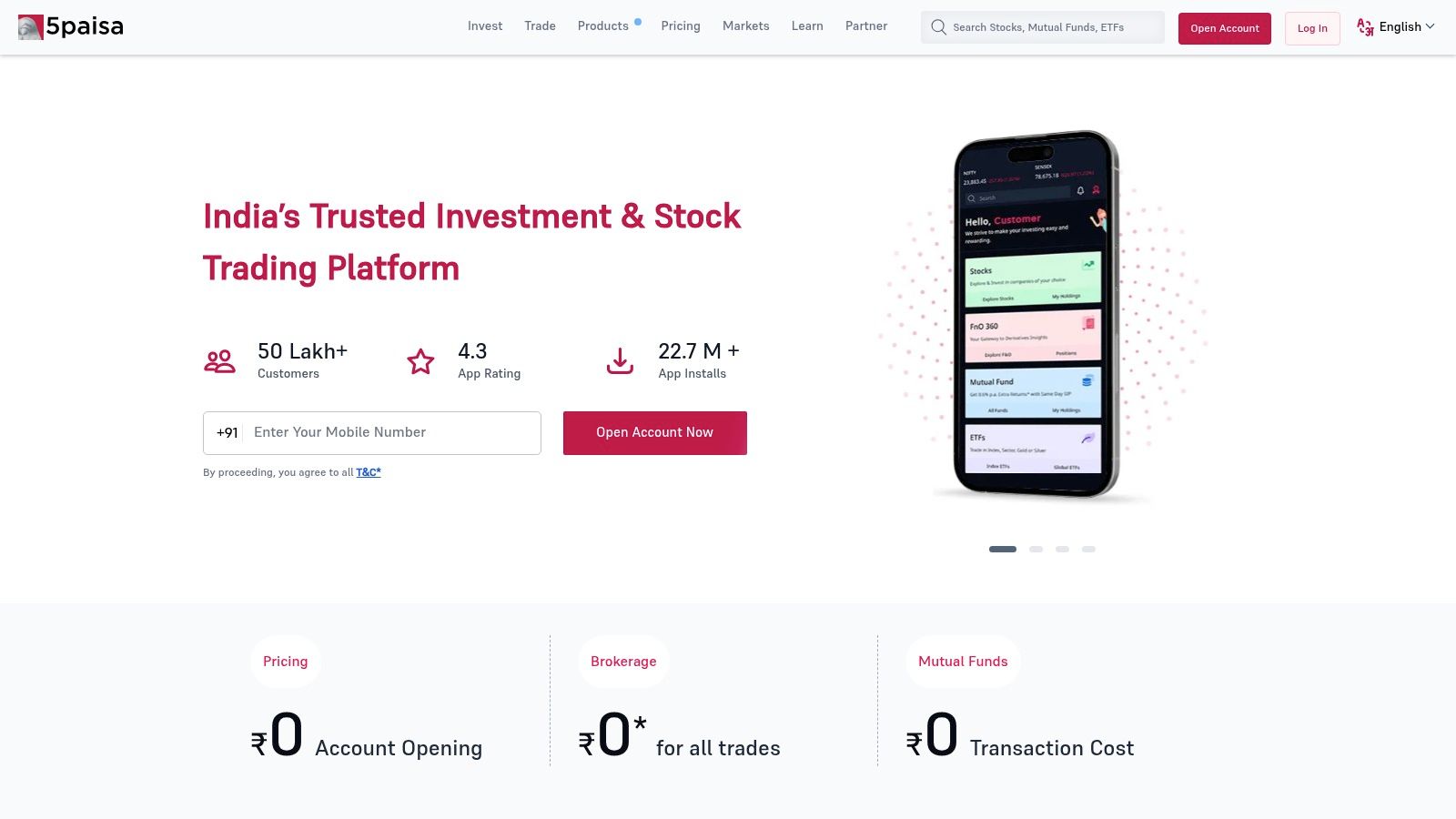
5paisa focuses on cost-conscious active traders while covering equity, F&O, commodity and currency segments. Its product case rests less on one standout interface and more on the combination of mobile trading, broad segment coverage, an API programme and a detailed charges portal.
The Xstream API provides developer documentation and key generation for algo trading and integrations. Users who are not developers can still benefit indirectly from understanding the API structure, because it signals how the broker documents access, authentication and available functions. Those building custom systems need to examine the full API terms, data scope and order-handling behaviour before relying on automation.
5paisa's charges portal is unusually important to the comparison because it itemises brokerage, DP charges, pledge fees and an AMC policy linked to traded months. It also provides calculators, but a calculator is only as reliable as the plan and segment inputs selected by the user.
Plan complexity needs active checking
Multiple plans and add-ons can make the platform harder to compare at a glance. Users should verify the applicable slab for their account and inspect call-and-trade, auto-square-off and other segment-specific charges. These details can matter more than a promotional brokerage label when an account is used regularly.
The useful comparison is the final ledger entry, not the fee printed in the app-store description.
The 5paisa website is the place to confirm current charges, API documentation and segment coverage. Its strongest use case is a trader who wants customisation and broad access but is prepared to spend time matching the correct plan and fee schedule to the intended activity.
Top 7 Indian Trading Platforms, Feature Comparison
| Platform | 🔄 Implementation Complexity | ⚡ Resource Requirements | ⭐📊 Expected Outcomes | 💡 Ideal Use Cases | Key Advantages |
|---|---|---|---|---|---|
| Zerodha – Kite (web + app) | 🔄 Low–Moderate, user-ready UI; Kite Connect for devs | ⚡ Low, lightweight, fast order placement | ⭐⭐⭐⭐ 📊 Stable execution, broad liquidity & charting | 💡 Retail traders, charting + basic automation | Transparent pricing, 100+ indicators, GTT, baskets |
| Upstox – Pro (web + mobile) + Developer API | 🔄 Moderate, pro tools + SDKs; developer-friendly | ⚡ Moderate, robust REST/WebSocket tooling | ⭐⭐⭐⭐ 📊 Good for algos and multi-order workflows | 💡 Algo traders, options chain analysis, multi-order use | Deep API tooling, official SDKs, transparent charges |
| Angel One – App/Web + SmartAPI | 🔄 Low–Moderate, research-first UX; SmartAPI for automation | ⚡ Low, built-in screeners/alerts; APIs available | ⭐⭐⭐ 📊 Research-led decisions; mixed delivery brokerage | 💡 Beginners to semi-active traders who value research | In-app research/screeners, clear tariffs, SmartAPI docs |
| Dhan – Web/App + TradingView + DhanHQ API | 🔄 Moderate–High, multiple terminals and integrations | ⚡ Moderate, free trading APIs; paid data for feeds | ⭐⭐⭐⭐ 📊 Feature-rich for options strategies and execution | 💡 Active/options traders, TradingView users, power traders | Native TradingView trading, dedicated Options Trader, many interfaces |
| FYERS – Web/Mobile + Trader + API | 🔄 Low, free platforms and straightforward APIs | ⚡ Low, no platform access fees; add-ons for data | ⭐⭐⭐ 📊 Cost-effective algo-friendly execution; check data scope | 💡 Budget-conscious algo traders seeking free APIs | Free trading APIs, flat/capped brokerage, clear calculators |
| ICICI Direct – App/Web (3‑in‑1) | 🔄 Moderate, bank-integrated 3‑in‑1 flows; advanced tools | ⚡ Moderate–High, bank linkage and plan-dependent costs | ⭐⭐⭐ 📊 Strong research & convenience; potentially higher costs | 💡 Investors wanting bank‑backed flows and in‑house research | 3‑in‑1 convenience, rich options toolkit, in‑house research |
| 5paisa – App/Web + Xstream API | 🔄 Moderate, discount model with developer API | ⚡ Low–Moderate, cost-focused; multiple plans/slabs | ⭐⭐⭐ 📊 Low-cost execution for active traders; verify slabs | 💡 Cost-conscious active/algo traders who need APIs | Detailed charges portal, Xstream API, broad market coverage |
How to Shortlist a Platform Without Relying on Hype
There is no universal winner in the search for the best trading platform in India. The better shortlist starts with the market segments you need, such as equity delivery, intraday equity, futures, options, commodity or currency, and then tests the platform against your expected order frequency and workflow.
India's retail market now demands more than a polished app. NSE reported that unique registered investors crossed 13 crore in April 2026, while client codes reached 25.7 crore by 25 Apr 2026. The exchange also reported investor participation growth at a 26.4% CAGR during FY21 to FY26, compared with 15.2% CAGR in the preceding five-year period, and said the investor base covered 99.85% of India's postal codes. These figures show why onboarding capacity, order reliability and support matter beyond the interface. NSE investor-base reporting provides the underlying context.
NSDL reported 4,61,73,386 active client accounts by 31 Jul 2026, coverage of 99.39% of the country's PIN codes, and demat custody value of ₹547.80 lakh crore. Its July 2026 settlement data included 2,548 crore equity shares on NSE versus 97 crore on BSE. The wider demat-account count was reported at about 23.4 crore, up from roughly 21.6 crore at the end of 2025 and 18.53 crore at end-2024. NSDL's statistics page shows why scale and nationwide access are now core platform requirements.
Use this verification sequence
- Map your segments: Confirm whether the broker supports the NSE and BSE products you intend to use.
- Model the complete cost: Compare brokerage with statutory charges, DP charges, AMC, pledge, call-and-trade and auto-square-off fees.
- Test order functionality: Check market, limit, stop-related, basket and GTT workflows in the actual interface.
- Test connectivity: Use the app on a weaker mobile connection. TRAI-linked reporting and mobile-network studies show meaningful differences in mobile performance, making lightweight pages, caching and resilient order tickets practical requirements. The nPerf India mobile-connections report documents this network context.
- Review API needs: Confirm whether trading APIs, SDKs, live data and historical data are included or charged separately.
- Check options tools: If you use multi-leg strategies, inspect the chain, payoff, basket, margin and execution workflow.
- Inspect support and complaints: SEBI's 2025 Investor Survey lists technical issues with online trading platforms and mobile apps among investor pain points. Its investor-charter timelines indicate that complaints can take multiple working days to be registered and forwarded, with amicable resolution targeted in 15 working days after registration. SEBI's Investor Survey gives this operational-risk context.
Regulatory verification should extend to content published inside or alongside a platform. SEBI's Research Analysts Regulations state that a person or entity cannot act as, or hold itself out as, a research analyst without a SEBI registration certificate, under regulations last amended on 10 Feb 2025. The amended regulations are the primary reference. SEBI's public guidance also says research analysts need a SEBI registration number and NISM-Series-XV Research Analyst Certification before offering services. SEBI's investor guidance explains that filter.
Where analysts work for a research entity, the entity itself must be registered under the RA Regulations, rather than every employed analyst holding separate registration. SEBI's FAQ explains that distinction. Investors should also expect a traceable process for complaints and disputes. SEBI's 2025-26 annual-report data recorded 61,788 complaints, including 19,908 exchange complaints involving stock brokers and 20,756 grievances in one SEBI tally, making broker-related complaints a material part of investor protection. SEBI's annual-report chapter is the relevant disclosure.
Finally, compare information access separately from execution. NSE's corporate-filings page displays the symbol, company name, subject, attachment or XBRL fields and broadcast date and time, creating a time-stamped public record of exchange disclosures. NSE corporate filings can help readers understand what a broker app may surface, while Bharatstox complements platform research with bylined journalism, timestamped attributed calls from SEBI-registered analysts, explanations of NSE and BSE filings, and low-bandwidth market panels.
This is for informational and educational purposes only and not investment advice. Consult a SEBI-registered adviser before investing.
Bharatstox publishes bylined market journalism, timestamped attributed research calls, NSE and BSE corporate-filing explanations, and lightweight market panels for mobile readers. Visit Bharatstox to compare platform features with clearer market context before you trade.
Disclaimer
This article is for informational and educational purposes only and does not constitute investment advice or a recommendation. Investing in securities markets is subject to market risks. Read all related documents carefully before investing.